Showing posts with label Nature. Show all posts

Friday, April 24, 2026

Wonder of Beavers

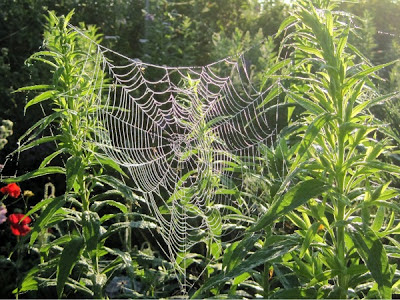
Elements of Earth's natural order, like spiders and our water system, are wonderful when you know more about them. But the whole system is wonderful in itself. Natural elements are balanced for a healthy ecosystem. 

Beavers were a traditional, natural element of the landscape of Scotland. Then they completely disappeared due to over-hunting . . 

Until this century. They're back after going extinct 400 years ago. In only 15 years, their resumed presence in the landscape made welcome and wonderful changes to Scotland's rivers. Flooding declined. Clarity improved and wildlife returned. Droughts were less destructive.

"Beavers re-built the living fabric of the river."

More: dam-building is instinctual. If the sound of running water is played in a dry environment, a beaver will pile sticks on it. Where does instinct come from? Maybe an algorithm built into the brain.

Thursday, April 23, 2026

Wonder 4

(cont'd from yesterday's post) 

  • Life requires minerals that are bound in our planet's rock. In the course of earth's water cycle, those minerals are dissolved and distributed all over the world. Water dissolves without destroying lots of things we need, while not dissolving necessary things.
  • Water's heat capacity helps us stay temperature-stable within a narrow range. 
  • Normally the frozen state of a liquid would contract and get denser. If frozen water got denser, it would sink. Lakes and rivers would be frozen from top to bottom, killing all aquatic life. But floating ice actually insulates and preserves the liquid state of the water beneath it.


"Water is the driving force of all nature," said Leonardo DaVinci. He didn't know what the last several hundred of years of science has discovered, but his intuition was correct.

The fine-tuning of water, and of nature in general, make possible the existence of complex beings such as ourselves, according to Michael Denton

from Salvo

Wednesday, April 22, 2026

Wonder 3

 Even common water is a wonder, when you know more about it.

Water 1

Water is known to be an essential element of the planetary environment which can sustain life. One of the most common substances on earth, it's simple: two hydrogen atoms and one oxygen atom. 

But its properties are rare:

  • it's an almost universal solvent
  • it holds a lot of heat
  • ice floats!


from Salvo

Tuesday, April 21, 2026

Wonder 2

(cont'd from yesterday's post)

Web 2

(cont'd from yesterday's post)

Different species of spiders make webs of special kinds: collars, trapdoors, tunnels, as well as the familiar net design. But exactly how do they know which kinds of proteins to combine that will give the web its flexibility, its legendary strength, its stickiness? And where to put the anchor points? Spiders don't make conscious choices relating to biochemistry, geometry, engineering.

Instinct is not an answer. It's a way of saying "we don't know." A credible path to evolutionary development of the biological web-building system would require every necessary gene mutation on that pathway to render a survival advantage of some kind (natural selection). A biologist and spider specialist says it may be impossible to figure it out.

Complex functions and behaviors like this bear a strong resemblance to a human engineering project, a very intentional and rational activity that involves mathematical and chemical formulas. 

Maybe science will someday discover algorithms that are somehow built into the genome. Coded information doesn't come from random material causes. But it would be consistent with the Creator God hypothesis.

from Evolution News

Monday, April 20, 2026

Wonder 1

All around us is the natural world. We're rightfully busy with our demanding responsibilities, but occasionally we have time and opportunity to pay attention to the natural wonders of our world. It's refreshing to notice some of the common but wonderful things.

Web 1

With all the advances of today's amazing science and technology, you'd think we could have reproduced something as simple and ubiquitous as spider silk. But no, it still hasn't(?) been done.


If you see a typical one in your garden, there's about 65-195 feet of silk in it. The threads may be sticky, spokes, bridge threads, signal threads to inform the spider of captured prey, or drag lines to give the spider access.

Signal threads communicate both the angle and the distance of the prey from the web's center. Somehow the intensity of the vibrations sensed through the spider's eight legs tell it where the captured prey is, and it can store three different prey locations.

Proteins in various combinations give the web features like stretchiness, flexibility and toughness. 

"Every set of initial anchor points is different; the number of radii is contingent on opportunity; the beginning of the sticky spiral depends on where the longest several radii turn out to be. In short, each web is a custom production.”


Thursday, June 26, 2025

Polyface Farm

Re-post from 2017

There's a beautiful farm in the Shenandoah Valley of northern Virginia. The passionate farmer, Joel Salatin, is known all over the world because his message resonates with almost everybody who loves nature, farming, or food . . also because he has oodles of personality and has written twelve books.

Polyface Farm is "the farm of many faces". They grow chickens, pigs, turkeys, cows, all the animals doing what they naturally do - unlike the typical industrial farm, which is a mono-culture of corn or chickens or something else.

Their methods are not ordinary, not like factory farms or CAFO farms. Animals are grown humanely on rich pastures which are sustainable. By the way, these pasture lands capture carbon like no factory farm can. The whole system produces healthy soil, healthy animals, nutritious food, and a beautiful environment.

It's called regenerative farming. 

Thursday, March 13, 2025

Pave paradise

Ten of thousands of acres of Amazon rainforest have been leveled--by the country that is famous for protecting it, Brazil. A big dirt track is carved across the great, green jungle. 

Why would they do such a thing? To build a four-lane highway. And why do they need a highway across the rainforest? Brazil has 50,000 people coming to a big conference next November, so they want to ease the expected traffic.

What kind of conference is behind this environmental destruction? Here's the irony of the thing--it's the United Nations Climate Change Conference, where delegates will try to protect our planet's natural environment. 

from BBC

Thursday, January 30, 2025

Clear cut

Much of northern Michigan is a hardwood or pine forest (photo), so valuable to the state and to the environment. It takes a long time to replace such a forest; estimates run from 40-100 years.


You'd think a forest like that would be protected, especially by environmentalists. But there's a proposal to clear 420 acres of it.

This parcel of land may be clear cut for a solar array: solar panels to cut our dependence on fossil fuels, solar panels to help save the environment. 

Pursuant to a law passed by the governor and legislature in 2023, utilities will have to get 80% of their power from clean energy sources by 2035. That's going to be a stretch.

State representatives say they don't like the idea of killing wildlife and trees to set up solar panels.

from The Detroit News

Tuesday, August 27, 2024

Helium 3 🎈

Follow-up to this post

It seems confirmed: northern Minnesota's newly discovered helium will put the state in a small group of global suppliers, competing with Russia, Qatar, and Tanzania. Analysis so far indicates "world class results" of the highest concentration the industry has ever seen, and a very large reserve underground.

Babbitt MN will profit from a new industry with new jobs, and America will have a wonderful access to this clean, non-renewable resource right within our own borders. 

 It will be great . . if and when the company (Pulsar Helium) and the state can put it together. Minnesota is working on regulations now, including where they want the state profits to go. Fortunately fracking won't be necessary, so that's one controversy that won't enter in.

Environmental impact is sure to be a mine field. There's only one comment to the video above on Youtube. Its writer describes this project's location as "an extremely sensitive and important ecosystem that connects to a huge area of pristine wilderness."

 from Hadco International

Friday, May 24, 2024

Happy 6

(cont'd from this post)

My yard is a happy place for me, definitely. Especially now, the "merry month of May."

There may even be a science-based element in it, per the article referenced here.

A re-post from 2018:

Dirt helps

"Most avid gardeners will tell you that their landscape is their “happy place” and the actual physical act of gardening is a stress reducer and mood lifter." And now there is science to back up that claim.

"There’s a natural antidepressant in soil . . . Mycobacterium vaccae is the substance under study and has indeed been found to mirror the effect on neurons that drugs like Prozac provide. . .The bacterium is found in soil and may stimulate serotonin production, which makes you relaxed and happier."

It "appears to be a natural antidepressant in soil and has no adverse health effects. These antidepressant microbes in soil may be as easy to use as just playing in the dirt."

photo: telegraph

Sunday, April 7, 2024

Eclipse🔆

Our moon covers the sun perfectly in a total solar eclipse, which can be seen in a path 115 miles wide across the U.S. today. In the shadow of the moon (that is, from a position within that path) all you can see (through the proper filter of course) is the corona of the sun. 

Doesn't it seem unlikely that our little moon would ever perfectly cover the huge sun which is 93,000,000 miles away? Yes it does, what a coincidence. 

Here's the explanation. The sun is about 400x bigger than our small moon--but it's also about 400x further away. From our point of view on earth's surface, the moon matches the size and shape of the sun. A total eclipse isn't visible in any other place in our solar system, and it doesn't matter because there are no observers to see it.

Keys to understanding space and light have been discovered because scientists on earth were able to observe total eclipses (discoveries explained here).

"So the best place to view total solar eclipses in our solar system is just where there are observers to see them. Let that sink in a minute." 

"The universe seems to be designed not just for life but also for discovery."

from The Stream

Tuesday, December 19, 2023

Meaning 1

Science can tell us about the structure of planets, plants and animals, and about the physical laws that direct their behavior. But it's silent about why they exist. 

We human beings look for the meaning of things. We want to understand and know the truth.  We're looking for the reason behind the facts. All of us routinely ask "why?" Scientist Albert Einstein himself asked why the universe is the way it is and couldn't answer that question.

Dr. John Lennox likes to use his example of a tea pot. Science can tell us the facts about H2O molecules, the temperature at which water boils, how long it will take, and more.  But only he can tell us why he's heating water. The answer is: he wants a cup of tea.

Some materialists would like us to agree with them that there's no purpose or meaning to reality, just the brute scientific facts: "[T]here is, at bottom, no design, no purpose, no evil, no good, nothing but blind, pitiless indifference.

But people are not wired that way. We all know there is more.

(cont'd tomorrow)

Friday, September 8, 2023

Mammoth

By drilling into the tusks and remains of extinct mammoths, researchers managed to get their complete genetic code. So Colossal Laboratories & Biosciences wants to re-create them by 2028: 

"We have the DNA, the technology, and the leading experts in the field. Next, we will have the woolly mammoth. Alive again."

Protecting the environment where mammoths used to live seems to be the motive. They see the animal as a "vital defender of the earth."

Others have been working on the project for years, Harvard University being one example, and the method seems to be the same. It is to take bits of the DNA of ancient mammoth remains and add them to a modern elephant embryo's DNA. The baby will develop within its modern elephant mother.

"Colossal believes that bringing back mammoths could help restore the arctic tundra, preventing the thaw and release of stored greenhouse gasses."W HAVE THE DNA,THE TECHNOLOGY AND THE LEADING EERTS IN THE FIELD. NEXT, WE WILL HAVE THEWOOLLY MMOTH. ALIVGAIN.VE HNATHE TECHNOLOGY AND TLEADING EXPERTS IN THE FIELD. NEXT, WE WILL HAVE THE WOOLLY MAMMOTH. ALIVE AGAI

Monday, June 12, 2023

Bee algorithm 3

(cont'd from last Friday's post) 

If you are open to the idea that God exists, the obvious appearance of design in the natural world -- in honey bee hives and the intricate dance directing other bees to flowers -- makes sense. If you start with a commitment to believing God does not exist, you have to think up something to explain away the design of the natural world. 

Even the famous crusader for atheism, Richard Dawkins, concedes that living animals appear to have been designed and wisely assembled. He definitely would not agree that the Creator placed an algorithm in the bee's brain to direct its behavior.

Committed atheistic scientists have to mentally fight the ubiquitous appearance of design in living systems. Francis Crick advises them: "Biologists must constantly keep in mind that what they see was not designed, but rather evolved." 

If they don't fight hard against their own common sense, they'll conclude that a Creator designed it.

Friday, June 9, 2023

Bee algorithm 2

(cont'd from yesterday's post)

Boston Research Journal was quoted in yesterday's post saying, "The use of hexagonal honeycombs by bees is not a coincidence." They think they know where this "ingenious" design came from. Not from intelligence or a plan, of course; not from an algorithm in their design; but from natural selection working on random genetic variations (evolution):

"Hexagonal honeycombs built by bees showcase nature’s ingenuity and efficiency. Through their meticulous construction, bees optimize space, create sturdy structures, conserve resources, and regulate temperature within the hive. The hexagonal shape has evolved as a result of millions of years of evolutionary fine-tuning, allowing bees to build remarkable architectural marvels that support their survival and collective success."

Isn't a bit of a stretch to assume that evolution made it all happen: optimizing space, regulating temperature, meticulous construction, etc., without any direction or intelligence?


These publishers along with most of the scientific world assume that bee behavior--like the "waggle dance" to communicate location of flowers and the building of the ingenious hive--came about solely by chance through evolution, no plan or design or intelligence necessary. 

Like office buildings . . which pop up randomly all the time!

No, you have to abandon common sense to believe that.

(cont'd next week)

Thursday, June 8, 2023

Bee algorithm 1

You could describe an office building as a complex, functional system designed to enable people to carry out their jobs and accomplish their company's purpose. Well-educated people designed and constructed all the sub-systems (like electrical) that make it work.

A honey bee hive is a complex, functional system constructed by bees in the wild or in human-made devices. Individual bees carry out their jobs in this home which provides for their needs while they accomplish the mission to produce honey.

Intelligent, these bees. They start working at their jobs when they're three weeks old. The ones who build the hive don't go to hive-building college, since they're born knowing exactly what to do. How, exactly, do they know that?

Glands in their bodies create construction material: "Wax is an expensive commodity and so comb construction can be quite costly for a honey bee colony. Honeycomb is constructed in such a way to minimize wax consumption." Like a responsible human engineering firm.

Its hexagonal pattern gives optimal strength and stability to its material (wax), while it optimizes space and thermal efficiency for its purpose. "The use of hexagonal honeycombs by bees is not a coincidence" (Boston Research Journal published this week).

from Evolution News

(cont'd tomorrow)

Friday, May 19, 2023

Seine swimming

Paris, France, began its long history before the birth of Christ when a Gallic tribe settled on an island in the Seine River about 250 B.C.E. That settlement grew on both sides of the river into one of the world's premiere cities. Notre Dame Cathedral was consecrated on that island in 1189.

The Seine River has been flowing through the city, used or abused, for hundreds of years. Nobody swims in it because it's very seriously polluted. But it's being cleaned up, a huge job at a price of about $1.5 billion. Waste water from 23,000 upstream homes was going right into the river.

People will be able to swim in it. That's a must because Paris is the site of next summer's Olympic games. Aquatic events will take place in the river. 

Parisians will be happy about that. "It's a dream," says an official.

from Bloomberg

Tuesday, March 21, 2023

Sargassum 2

Follow-up to this post

A question I had about that seaweed mat in the Atlantic: is it coming to Florida, especially now that spring break is nearly here? The answer is No, it won't pollute those beaches, though there may be a bit of a nuisance further south in the Keys.

Here's a current satellite-based map of its size and location between Africa and the Gulf of Mexico:


The mat is not without advantages. It's a good habitat for some sea life, and it absorbs carbon dioxide (it's brown algae). But in excess, it could cast shade on big ocean areas and that's potentially a low-light problem for marine life.

Science labs are watching the mat but haven't answered all the questions yet - except for the obvious advice to keep boats out of it. See one that is trapped in a mess here.

Friday, March 17, 2023

Sargassum

For over ten years a wide mat of seaweed has been floating in the Atlantic Ocean between Africa and the Gulf of Mexico. It's a kind of algae that blooms in the spring/summer, kind of harmless but very much a nuisance.

Beaches in Mexico have piled up with it, then it rots, then it smells and turns vacation destinations into disgusting destinations that tourists want to avoid - a big clean-up challenge when it lands on beaches.


Well, it's not entirely harmless. Underwater machinery gets clogged, it can choke corals, and it may trigger respiratory problems. 

This year's bloom is expected to be huge, which is saying something. It's already been more than 5,000 miles long and can be seen from space.

Thursday, December 15, 2022

Dark sky

 "Protecting the night from light pollution," that's what the International Dark-Sky Association (IDA) has been doing since 1988. 

To those who would question their mission, they say: "When used indiscriminately, outdoor lighting can disrupt wildlife, impact human health, waste money and energy, contribute to climate change, and block our view of the universe."

My husband and I for many years have camped in a tent on the North Shore of Lake Superior. This beautiful, natural ecosystem alongside the world's biggest lake has a few small towns but no big cities and little artificial light. The nights are really dark and the stars are glorious. On clear, warm nights we uncover the mesh roof of our tent and fall asleep looking into space.

It's an experience you can't get in a city. I hope you have a good way to enjoy the dark, starry night sky.