Showing posts with label Capitalism. Show all posts

Thursday, March 23, 2023

EV charging 2

(cont'd from yesterday's post)

U.S. government policy at this time is all-in with electric vehicles. Last year the president, the Dept. of Transportation, and the Dept. of Energy announced that $5B - five billion dollars - is going toward a national electric vehicle charging network.

States will use the money to build the charging network, subject to their federally-approved plan, primarily along the Interstate Highway System. It seems drivers will pay a fee to use it, so that 1956 law against selling products at the rest stops will have to be changed.

The new Joint Office of Energy and Transportation was formed to facilitate the joint function of the two departments. Their website, Drive Electric, describes what they're creating:

"A modernized and interagency approach to support the deployment of zero-emission, convenient, accessible, equitable transportation infrastructure"


Tuesday, November 22, 2022

Activist Bono 2

(cont'd from yesterday's post)

Why is activist Bono in the news again? Because he did a recent interview with the New York Times about how to help the global poor, and anti-capitalists really didn't like it. Capitalism is the economic system that brings people out of poverty.

Bono himself doesn't like the idea: "The off-ramp out of extreme poverty is, ugh, commerce, it’s entrepreneurial capitalism." (He has plenty of company in his distaste.) But apparently he has enough integrity to tell the truth in spite of his prejudice against the answer.

"I didn’t grow up to like the idea that we’ve made heroes out of businesspeople, but if you’re bringing jobs to a community and treating people well, then you are a hero." Indeed.

from American Enterprise Institute

Thursday, April 7, 2022

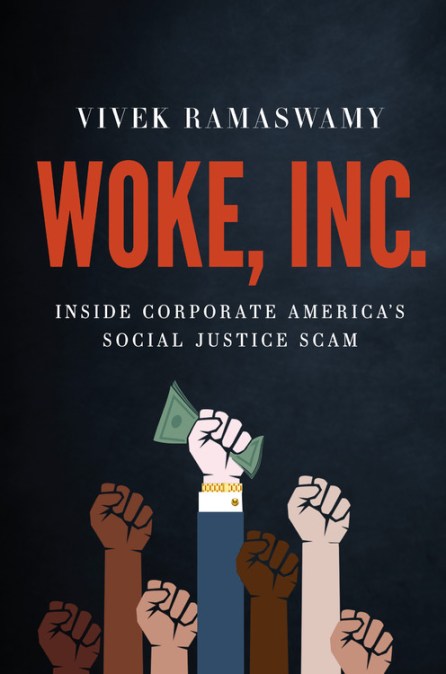
Ramaswamy 3

(cont'd from yesterday's post)

Vivek developed the ability to recognize abandoned ideas for medicines that could still help people and that could be mass produced profitably. Maybe he'll lose millions of dollars doing testing on some drugs that will never succeed. But he believes this will work and he chooses to take the risk. It's the classic picture of a startup business in a free enterprise environment.

But he stepped aside from the day-to-day CEO duties of his companies to focus on a hot issue in American life that he cares about, the wave of wokeism and its promotion by big companies.


As a young American business insider, he learned more than he wanted to know about corporate life. He appreciates the money he makes with good business ideas empowered by his talent and hard work. But he most certainly does not like the games that are played within the woke corporate bubble. He says they put up a fake progressive "do-good smoke screen" to make more money and grab more power.

"Basically, being woke means obsessing about race, gender, and sexual orientation . . . even though generations of civil rights leaders have taught us not to focus on race or gender."

from NYPost

Wednesday, September 16, 2020

007 Philanthropy

Forbes calls him "The James Bond of Philanthropy." He wanted to die broke, and that's going to happen. Over the past decade he's given away the $8 billion fortune which he made after co-founding Duty Free Shoppers.

photo

Many wealthy individuals leave their charitable giving in their will, to be dispersed after their death. But Charles Feeney had a different vision. Since you can't take it with you—why not give it all away while you're alive, have control of where it goes and see the results? 

His vision impacted other givers. Laurene Powell Jobs (Steve Jobs' widow) says, "Chuck Feeney is a true pioneer. Spending down his resources during his lifetime has inspired a generation of philanthropists, including me."

(cont'd tomorrow)

Monday, April 6, 2020

Good liberty 1

There's a serious public debate going on in America (one of many) to ask which is better for us, socialism (government-controlled economic system) or capitalism (a person is free to create her or his own productivity). 

Those terms will have to be defined so we know what we're talking about, and that's a future post.

But before we get there, here are some good quotes from Jonah Goldberg (disclaimer: I don't endorse everything he writes) to answer the question, "what's so great about freedom?"

"The government can improve your net worth, but not your self-worth, and your self-worth comes from earned success and the good character that allows you to recognize what that means. If I could earn success for my daughter, I’d be tempted to do it. But I can’t and neither can the government.

"The free market creates opportunities for people to find what is meaningful to them . . creates opportunities for people to find their niche."

(cont'd tomorrow)

Thursday, October 3, 2019

Cambodia 4

(cont'd from yesterday's post)

Freer market reforms during the 1990's opened the door to optimism. Mr. Lim's parents had no hope for a better future, but his own generation saw that grinding poverty as rice farmers was no longer the only option: they saw freedom to improve their lives.

From 1995 to 2017 Cambodia's economy grew at an average rate of 7.7% per year. (To compare, good growth in the U.S. is about 3%/year.) In 2007 the poverty rate was still about 47%, but by 2014 it was at 14%.

What does Cambodia look like now? This author recently visited Mr. Lim and reports:

"Mr. Lim works in tourism. He drives a Lexus SUV on paved roads. He buys groceries from a thriving local market, and his daughters go to school. His brother owns a pharmacy in Phnom Penh. Another brother is a nurse at a major hospital . . There are entrepreneurs everywhere . . I witnessed family-owned coffee shops, restaurants, general stores, and roadside markets."

In one generation the grim poverty was turned around. Mr. Lim says it came because of: "Peace, education, technology, and the entrepreneurial spirit of Cambodian people.”

from "Entrepreneurship Lifts Cambodia from the Clutches of Extreme Poverty in a Single Generation"

Wednesday, October 2, 2019

Cambodia 3

(cont'd from yesterday's post)

Pol Pot's hideous regime (Khmer Rouge) was ended by Vietnam, which captured and plundered the capital (Phnom Penh) in January of 1979. The ruined nation of Cambodia became the "People's Republic of Kampuchea" (the PRK) and remained a communist state.

"Under Vietnamese control, the PRK was established in the wake of the total destruction of the country's institutions, infrastructure and intelligentsia wreaked by Khmer Rouge rule."

Lim Pengkhun was born to rice farmers in 1980. "For the first 15 years of [his] life, Cambodia was a command economy controlled by communist and socialist policies and remained one of the most impoverished nations in the world."

But things changed in 1989 when the last Vietnamese occupiers left Cambodia, and reforms started transitioning their economy from "command" to free market. New private property rights turned state-owned enterprises into person-owned enterprises. The U.N. invested in education, infrastructure, and health.


(cont'd tomorrow) 

Tuesday, October 1, 2019

Cambodia 2

(cont'd from yesterday's post)

About two million is the number of Cambodian people murdered by their own government during the "killing fields" period between 1975 and 1979. That's 20-25% of the total population, but the suffering went even further than the appalling number of deaths..

A boy of five or six lived through it and tells his memories as an adult in the video below. He lost his whole family:


A woman soldier in the Khmer Rouge army now grieves her own participation in the brutal war of the government against the people here.

(cont'd tomorrow)

Monday, September 30, 2019

Cambodia 1

Disaster came to Cambodia in 1975. Here's how it happened.

A boy who had been educated in Cambodia's elite schools went to Paris, France, and became a follower of Marxist-Leninist communism there. Returning in 1953, he joined communist forces fighting the Cambodian government. The boy was Pol Pot.

Eventually he led his armies to defeat the government, and took control of Cambodia's politics and economy in 1975. His goal was to create an "agrarian socialist society," so he forced people out of cities and onto collective farms. 

His vision demanded social uniformity. His solution to dissent was to kill dissenters.


"Following the examples of Stalin and Mao, Pol Pot brutally murdered more than one million Cambodians in the infamous Killing Fields of 1975-1979 as he implemented his vision of communist utopia. He abolished private property, money, prices, commerce, and even cities—a full descent into barbarism.

"Death sentences were levied against any number of “class enemies.” Simply being a former civil servant, student, artist, or capitalist of any variety—including a “street noodle vendor or a motorcycle taxi driver”—was enough to earn a spot in one of Pol Pot’s mass graves."

(cont'd tomorrow)

Friday, September 27, 2019

Got banking 2

(cont'd from yesterday's post)

Tala is not a non-profit charity. It's a business that must make profit to stay in business, so its banking services are not free. Customers must buy their services and pay for them.

Amylene Dingle, one of their customers, paid interest and a small fee for her first ($20) and subsequent loans. Like all business owners, she took a risk when she bet that people would want her product and that she could generate a profit of her own.  She was right, it was well worth it, and her family is much better off.


In a "free enterprise" or "free market" economic system, people like Amylene are free to do as she did. She is entitled to use her own intelligence, to act on her idea - and she's entitled to the rewards of her own work.

In socialism's "control or command economy," somebody in the government decides if she should be allowed to pursue her goal. And her business will never actually belong to her. Private ownership is abolished, and the business will belong to the collective which of course is run by the government.

Thursday, September 26, 2019

Got banking 1

Just a few years ago, Amylene Dingle and her family lived in an impoverished part of Manila, the Phillippines. Her life changed when she saw an ad on Facebook for "Tala," and she responded to it.


Amylene was granted a small ($20) business loan from Tala. She used it to buy cold cuts/hamburgers/hot dogs and then re-sold them. Her business grew, and today she's making about $70 per week in profit. They now live in a cleaner, quieter neighborhood.

Tala was founded in 2011 by Shivani Siroya, a former Wall Street analyst who was raised in New York by Indian immigrant parents. After working at the United Nations, she started Tala specifically to provide banking services (like loans) to people in parts of the world where banking is not accessible to them.

from Forbes

(cont'd tomorrow)

Monday, September 23, 2019

Blind to it

A young woman sits in a hipster coffee shop, puts her phone down, and looks around. She sees "people talking freely, working on their MacBooks, ordering food they get in an instant, seeing cars go by outside, and it dawned on me. We live in the most privileged time in the most prosperous nation and we’ve become blind to it."

Even the American poor can hardly compare to the the poor of the rest of the world. "Virtually no one in the United States is considered poor by global standards. Yet, in a time where we can order a product off Amazon with one click and have it at our doorstep the next day, we are unappreciative, unsatisfied, and ungrateful."


A young politician claimed recently that her generation has never seen American prosperity.

"Never saw American prosperity. Let that sink in. When I first read that statement, I thought to myself, that was quite literally the most entitled and factually illiterate thing I’ve ever heard in my 26 years on this earth."

from "Thoughts from a Hipster Coffee Shop"

Friday, August 16, 2019

HSR & Hyperloop

(cont'd from yesterday's post)

An editorial (2018) at Investor's Business Daily says, "Hyperloop Is Running Circles Around California's 'High Speed' Rail Boondoggle." 

The CA train project is years late and billions of dollars over budget. But the state government continues to throw huge amounts of taxpayers' money into it. (The question begs to be asked: why?)

Meanwhile, progress on the hyperloop idea has moved at breakneck speed. New and innovative though it is, the idea has already generated at least two companies (VHO and HTT) which are developing the technology and moving ahead with multiple projects. Get some background here.

When it comes to business, central-planning-by-government is not best. California's HSR linking San Francisco and Los Angeles looks like a waste of resources.

"In contrast, private investors risking their own money aren't going to build hyperloop systems that are endlessly over budget and that won't attract significant ridership. And when they do see an opportunity, they won't take two decades to build it. 

Wednesday, July 3, 2019

Not broken

"Capitalism is not broken. It does not always work perfectly, of course. But the free market combined with our strong safety net has drastically reduced poverty and improved quality of life for the vast majority of Americans."

When people are  1) free to be creative, to be different, to explore new ideas; 2) free to pursue what they're good at or passionate about; 3) free to keep and enjoy the results of their own ideas and hard work . . . you have a growing economy, a "rising tide" that "raises all ships."

Capitalism has brought about the modern world: abundant and varied food, breathtaking technological advance, vastly improved health and length of life, cheap access to information, etc. 

"Capitalism isn’t broken – it’s our best shot at keeping the American Dream of freedom and success alive."

(cont'd in Friday's post)

Friday, June 21, 2019

Yogurt 3

(cont'd from yesterday's post)

Here is a person who understands the impact of small business. 

He bought the factory. The employees kept their jobs. They accomplished something big and had the joy of it. They built a new Little League field in town. For every new Chobani hire,  ten more jobs are created in the town. Every one of them enjoys new wealth.

He had not taken a business course on how to create vision or how to motivate his employees or how to draw up a business plan. He's an intuitive, natural-born entrepreneur. He saw what needed to be done and kept doing it. 

Only a small percentage of people are willing to take that kind of risk (he borrowed $700,000 for the factory), and put all their time (for years) into hard work.

Hamdi is another in the long tradition of immigrants who come to America and bloom in the liberty. 


Thursday, June 20, 2019

Yogurt 2

(cont'd from yesterday's post)

Hamdi bought the factory with borrowed money, and had a meeting with four employees that he rehired. His only idea was to paint the walls white. Mike (one of the four) said, "Hamdi, tell me you have more ideas than that!"

Mike and the others were hoping for more ideas . . namely, a bunch of ideas to make the factory successful. To make enough money to keep this business operating, they would have to make and sell a lot of yogurt, at least enough to cover all their expenses and pay the employees.

Only one hint of how they did it is given in yesterday's video: Hamdi and his original employees worked day, night, and weekends - for five years! I remember that Elon Musk has a bed at Tesla. Whatever Hamdi and his employees did to establish this new business, it took a great deal of effort.


(cont'd tomorrow)

Wednesday, June 19, 2019

Yogurt 1

Hamdi, originally from Turkey, drove down a dead end road in upstate New York and toured the factory of a failed business. He met the people. He took a serious risk.

Listen to this inspiring story.

(cont'd tomorrow)


Thursday, May 23, 2019

Free trade 3

(cont'd from yesterday's post)

Back in 2002, fifty-five nations on the continent of Africa joined together in the African Union (AU) to advance their vision of an "Integrated, Prosperous and Peaceful Africa."

Last year, AU leader and president of Rwanda Paul Kagame introduced a new free trade agreement:  the African Continental Free Trade Area (AfCFTA). Twenty-two of the AU member countries have ratified the agreement, and it should go into effect soon.


It's a "a continental geographic zone where goods and services move among member states of the AU with no restrictions."

"The AfCFTA is expected to boost consumer spending to about US$1.4 trillion in 2020 and increase intra-African trade by as much as US$35 billion per year, or 52 percent above the baseline by 2022."

Many decades of socialism, corruption, and governmental "aid" have left African nations in worse economic shape than they were back in the mid-20th century. There is fervent hope that this new free trade agreement can expand African economies while lifting millions out of poverty and into prosperity.

Wednesday, May 22, 2019

Free trade 2

(cont'd from yesterday's post)

The African continent was colonized by European countries in the 1800's. African nations became free to govern themselves in the 1900's, but residual bad memories of colonial days remained. 

According to President of the Free Africa Foundation, George Ayittey, “capitalism was identified with colonialism, and since the latter was evil and exploitative, so too was the former.” Sadly, as African nations were released from colonialism in the 1957 - 1960's, they embraced socialism.

"Ghana’s first leader Kwame Nkrumah was a self-proclaimed “Marxian Socialist,” and encouraged other African states to seek independence and pursue the “complete ownership of the economy by the state.”

photo of George Ayittey

The result, according to Professor Ayittey, was "economic ruin, dictatorship and oppression." Socialism is not economic freedom, as Nkrumah stated. Production of goods and services is managed and owned by the central planning arm of the government, not by people who make and grow things in neighborhoods and cities.

Socialism is not the free trade of free citizens, and it does not make them wealthier.