J. C. Huizenga, who grew up as the son of a garbage collector, is a remarkable boss. When he sold his business, he gave his 525 employees remarkable bonuses - to a total of $5.75 million.
As Huizenga put it, “It was very appropriate, [that] when we sold the company . . . the employees should participate in the wealth we created.”
"It's great to be a giver," he said.
Thursday, April 30, 2015

Wednesday, April 29, 2015
Brave woman
Refugees from the African country of Somalia flee across the border into Kenya to escape random attacks from Islamic militant group Al-Shabaab. Many find help from one courageous Kenyan woman, 34-year-old Amran Abdundi.

Through her "Frontier Indigenous Network," Amran provides shelter and first aid to beaten and raped women who sometimes have their children with them.
CNN asks, The region is quite unstable. Is it not dangerous doing this kind of work?
Kenya: commons.wikimedia.org
Through her "Frontier Indigenous Network," Amran provides shelter and first aid to beaten and raped women who sometimes have their children with them.
CNN asks, The region is quite unstable. Is it not dangerous doing this kind of work?
Amran: "It's very, very dangerous."
(from cnn)
Tuesday, April 28, 2015
Re-foresting
"Cutting trees is a scientific, industrialized process. On the other hand, tree-planting is mostly done by hand." Since earth is losing 11 billion trees per year, the way to reverse the loss is to "find someone who can enable industrial-scale reforestation." Environmental engineer Lauren Fletcher is that guy (yesterday's post) who will take it on.

Deforestation is a concern because trees are enormously important to life on earth. They absorb carbon dioxide, use it for photosynthesis, and emit oxygen as a waste product back into the air - oxygen that we all breathe. Then humans and animals exhale carbon dioxide back into the air for plants to absorb. The global system works beautifully, but is getting out of balance.
How willl they plant a billion trees per year? Check out their website.
How willl they plant a billion trees per year? Check out their website.
Monday, April 27, 2015
Re-forest
Still another plan has popped up for improving earth's climate - use drones to plant millions of tree seedlings.
The idea comes from an environmental engineer who worked 20 years for NASA. “We are going to counter industrial scale deforestation using industrial scale reforestation,” he says on the website.
How many trees? A billion trees per year.
This passionate engineer says he likes "solving big global-scale problems . . ."
(cont'd tomorrow)
The idea comes from an environmental engineer who worked 20 years for NASA. “We are going to counter industrial scale deforestation using industrial scale reforestation,” he says on the website.
How many trees? A billion trees per year.
This passionate engineer says he likes "solving big global-scale problems . . ."
(cont'd tomorrow)
Friday, April 24, 2015
7th of Ten
Good family relationships are just vital to a thriving, stable culture. Dennis lays out sound reasons for God's seventh commandment, "Do not commit adultery."
Thursday, April 23, 2015
Handcuffs
His hand cuffed to his daughter's, Chen Yen got attention. He was taking her to a Chinese New Year celebration and was worried that she might be stolen from him. It's an understandable fear in light of this:
"An estimated 70,000 children are kidnapped in China every year as the country's tough one child policy has led to very few children being put up for adoption, in turn fueling a chilling black market in kidnapped children for couples unable to have their own."
Other speculation says that girls may be stolen to become brides, since there are 33 million more men in China than women.
"An estimated 70,000 children are kidnapped in China every year as the country's tough one child policy has led to very few children being put up for adoption, in turn fueling a chilling black market in kidnapped children for couples unable to have their own."
Other speculation says that girls may be stolen to become brides, since there are 33 million more men in China than women.
Wednesday, April 22, 2015
Submission
ISIS used video to announce another execution. This time it's Ethiopian Christians within the country of Libya.
Why did they do it? The usual reason:
"Addressing “the nation of the cross,” the film’s narrator declared: “We swear to Allah, the one who disgraced you by our hands, you will not have safety, even in your dreams, until you embrace Islam.”
Why did they do it? The usual reason:
"Addressing “the nation of the cross,” the film’s narrator declared: “We swear to Allah, the one who disgraced you by our hands, you will not have safety, even in your dreams, until you embrace Islam.”
Tuesday, April 21, 2015
Dark no more
"How Nicaraguan Villagers Built Their Own Electric Grid" - what? Built their own . . electric grid?! How great is that.
"Modern infrastructure had bypassed Nicaragua’s northern highlands, so locals took matters into their own hands" with some cable, other stuff, and some positive thinking.
“We’ve always lived in the dark here,” says Salvador Gonzáles, a resident of the valley and one of the men volunteering on the line crew. For him, the arrival of electricity means a refrigerator and a leap in quality of life. “I’ll have my soda cold, some chicken, some meat, a Popsicle,” he says."
"Modern infrastructure had bypassed Nicaragua’s northern highlands, so locals took matters into their own hands" with some cable, other stuff, and some positive thinking.
“We’ve always lived in the dark here,” says Salvador Gonzáles, a resident of the valley and one of the men volunteering on the line crew. For him, the arrival of electricity means a refrigerator and a leap in quality of life. “I’ll have my soda cold, some chicken, some meat, a Popsicle,” he says."
Monday, April 20, 2015
Solar cells
Solar cells capture light from the sun and transform it into electricity - that's solar energy. Light from the sun is free, so that's good. But solar panels are dark (because they absorb the light) and heavy. In cities, where energy is most needed, where can they go? Just on roofs and unused land (very little of that in cities).
Research into better ways to capture that energy is ongoing. But it sounds like there is an innovative breakthrough taking place right now.
Research into better ways to capture that energy is ongoing. But it sounds like there is an innovative breakthrough taking place right now.
Friday, April 17, 2015
6th of Ten
Notice, the video below says "do not murder," rather than "do not kill," as most Bibles say it. Dennis Prager explains the difference and the reason that the difference makes sense.
Thursday, April 16, 2015
Warhol guide
Famous economist Arthur Brooks wrote a brilliant piece for the NY Times last weekend, called "Andy Warhol's Guide to Public Policy."
You remember Andy Warhol . . the guy who did a painting of a can of Campbell's Soup. But why did he do that? Turns out that he said that he actually liked boring things. He saw the beauty in things so ordinary that we overlook them.

You remember Andy Warhol . . the guy who did a painting of a can of Campbell's Soup. But why did he do that? Turns out that he said that he actually liked boring things. He saw the beauty in things so ordinary that we overlook them.
Arthur says that something like that is true in policy issues:
"[T]he very best example of the Warhol principle in policy is international trade. If it is progress against poverty that we’re pursuing, trade beats the pants off every fancy development program ever devised. The simple mundane beauty of making things and exchanging them freely is the best anti-poverty achievement in history.
" [A]round a billion people have escaped destitution since 1990. Why? It isn’t the United Nations or foreign aid. It is . . free trade in poor countries.
"That mug in your hand that says “Made in China” is part of the reason that 680 million Chinese have been pulled out of absolute poverty since the 1980s. No giant collaboration among transnational technocrats or lending initiatives did that. It was because of economic reforms in China, of people making stuff, putting it on boats, and sending it to be sold in America — to you."
Wednesday, April 15, 2015
Which aid
Greg Mills lives in Africa and heads up the Brenthurst Foundation that tries to promote "positive economic change in order to strengthen the importance of Africa in the global market." He's just passionate about helping Africans create wealth to improve their standard of living.
Like other Africans (click on "Africa" under Labels on the right), he sees "development aid" (not emergency aid) as having a bad effect on African lives because it perpetuates a paternalistic prejudice that sees Africans as helpless - and actually creates that situation to some extent.
To judge from this article, apparently Bob Geldof still argues for development aid from western governments though he also has added business investment to the solution (see last Friday's post).
The central issue as I see it is that development aid from the outside will never answer Africa's needs. As Bono said, aid is short-term. It's just not good enough.
Like other Africans (click on "Africa" under Labels on the right), he sees "development aid" (not emergency aid) as having a bad effect on African lives because it perpetuates a paternalistic prejudice that sees Africans as helpless - and actually creates that situation to some extent.
To judge from this article, apparently Bob Geldof still argues for development aid from western governments though he also has added business investment to the solution (see last Friday's post).
The central issue as I see it is that development aid from the outside will never answer Africa's needs. As Bono said, aid is short-term. It's just not good enough.
Tuesday, April 14, 2015
Best
Political independence for African countries was won years ago, but "today our challenge is for Africa to gain economic independence . . economic participation and prosperity, that's the challenge of our time." So says Malik Fal, a key player in the wave of wealth that is going to be created there.
Paternalism is not the answer. Instead, he says, "it is real business that results from hard work, genuine good products and services that other people need to buy."
Paternalism is not the answer. Instead, he says, "it is real business that results from hard work, genuine good products and services that other people need to buy."
Monday, April 13, 2015
Better
(cont'd)
Rock star Bob Geldof is changing his approach to Africa's problems. After decades of demanding aid from the people and governments of the West (and getting it), he now advocates business investment.
Health or famine crises call for humanitarian aid to ease suffering during emergencies. But the billions upon billions of dollars of development aid that went to government programs over recent decades was often squandered.
Instead of raising standards of living for the people, it more often funded armies and lined the pockets of dictators. This was Dambisa Moyo's point in Dead Aid.
"Bob Geldof, once the unlikeliest face of capitalism, has extolled the virtues of private equity for spurring development in Africa . . ."I have learned that private equity . . can be a major vehicle for positive change in this world."
Rock star Bob Geldof is changing his approach to Africa's problems. After decades of demanding aid from the people and governments of the West (and getting it), he now advocates business investment.
Health or famine crises call for humanitarian aid to ease suffering during emergencies. But the billions upon billions of dollars of development aid that went to government programs over recent decades was often squandered.
Instead of raising standards of living for the people, it more often funded armies and lined the pockets of dictators. This was Dambisa Moyo's point in Dead Aid.
"Bob Geldof, once the unlikeliest face of capitalism, has extolled the virtues of private equity for spurring development in Africa . . ."I have learned that private equity . . can be a major vehicle for positive change in this world."
Friday, April 10, 2015
Geldof
"After a deadly famine struck Ethiopia in 1983, Irish punk rock singer, Bob Geldof, and other music artists, raised about $145 million for its victims through the 1985 Live Aid concert."

photo: wikipedia.co
He wrote "Do They Know It's Christmas" which became "biggest-selling single in UK history up to that point." "Though well-intentioned in its aim to support Ethiopia, and successful at evoking sympathy and financial charity from the West, the song came under criticism for perpetuating an image of Africans as hopeless individuals, dependent on outside assistance to support their well being."
Recently, Geldof's efforts on Africa's behalf have taken a new direction. More on Monday.
Thursday, April 9, 2015
Profits
What is profit? Is it wrong to make a profit? Think it through, because there's a lot of confusion on these points. Professor of economics Walter Williams of George Mason University offers some clarity:
Wednesday, April 8, 2015
But growing
(cont'd)
"Wave after wave of hardship" has hit these Iraqi refugees, but in that Bible study in the crowded apartment (yesterday's post) there are signs of not just survival but life and growth.
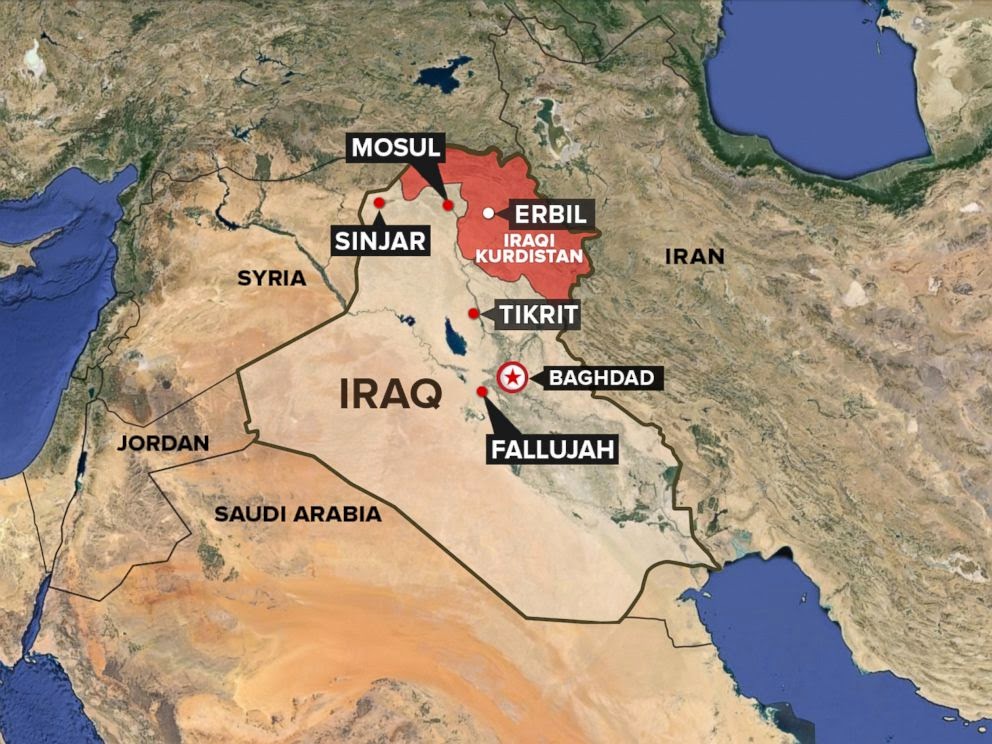
"The Bible study covers basic teaching and the group is earnest, unrushed, and everyone contributes. It’s remarkable, considering that some of the families have evangelical backgrounds, while others are from Chaldean or Orthodox churches; some are from the city of Mosul, others from small villages. Some know their Bibles, and some are just learning. "
From the book of Hebrews, their pastor reminds them to "run the race with endurance."He asks "if they are learning in the midst of their suffering and everyone nods, yes. “This thing has made me know God more. I am praying three hours a day,” says one."
"Wave after wave of hardship" has hit these Iraqi refugees, but in that Bible study in the crowded apartment (yesterday's post) there are signs of not just survival but life and growth.
From the book of Hebrews, their pastor reminds them to "run the race with endurance."He asks "if they are learning in the midst of their suffering and everyone nods, yes. “This thing has made me know God more. I am praying three hours a day,” says one."
Tuesday, April 7, 2015
Displaced
Last summer and fall, IS was raging through Iraq, destroying homes and churches, monuments, etc. Those people lost much - and are now displaced, some still in Iraq. Hard to believe, but a million people have fled to cities of Iraqi Kurdistan which is only the size of West Virginia.
A two-bedroom apartment is home to two families, twelve people. It is also the site of a Bible study led by pastor Malath Baythoon. So they push back the mattresses and make room for 25 Christians to come together to study the Bible.
"Baythoon’s church is only two years old, and now about 70 percent of his congregation are displaced survivors of the ISIS onslaught. They live everywhere from tents to shopping centers . . . His church gets funds from a church in Indiana to help cover six months’ rent for 41 units . . ."
"What they have in common is a terrifying night flight from militant jihadists with guns, leaving all that they knew and owned behind . . ."
(cont'd tomorrow)
A two-bedroom apartment is home to two families, twelve people. It is also the site of a Bible study led by pastor Malath Baythoon. So they push back the mattresses and make room for 25 Christians to come together to study the Bible.
"Baythoon’s church is only two years old, and now about 70 percent of his congregation are displaced survivors of the ISIS onslaught. They live everywhere from tents to shopping centers . . . His church gets funds from a church in Indiana to help cover six months’ rent for 41 units . . ."
"What they have in common is a terrifying night flight from militant jihadists with guns, leaving all that they knew and owned behind . . ."
(cont'd tomorrow)
Monday, April 6, 2015
To the end
As Easter 2015 passes into history, here's a bit more to think about - Jesus made his decision to submit to the Father's plan (including death and resurrection) with his human will, being both human and divine.

There was "nothing passive about it . . His human will freely embraced the act of love by which he died and restored us to fellowship with his Father and with each other."
"[H]e loved [his own] unto the end," to the ultimate extent.
"[H]e loved [his own] unto the end," to the ultimate extent.
Friday, April 3, 2015
Easter 2015
Do you remember last year's Easter? I remember that I was listening to Handel's "Messiah" all that week and it was awesome (yes, really).
This week I didn't write about it. But I invite you to go back to the 2014 Easter posts of April 16, 17, and 18, as I just did, and celebrate the good and beautiful plan that God crafted for humanity in the resurrection of His Son.

This week I didn't write about it. But I invite you to go back to the 2014 Easter posts of April 16, 17, and 18, as I just did, and celebrate the good and beautiful plan that God crafted for humanity in the resurrection of His Son.
Kenya attack
In a "brazen assault on civilians," the Somali terrorist group Al-Shabaab attacked Garissa University College in Nairobi, Kenya, at 5:30 a.m. yesterday.

"Then they proceeded to the hostels," [lecturer Joel] Ayora told CNN, referring to the university dorm, "shooting anybody they came across -- except their fellows, the Muslims."
"One student who escaped the attack, Collins Wetangula, told the Associated Press he locked himself and three roommates in their dormitory room, then heard the gunmen opening doors, asking if those inside were Muslims or Christians and shooting the Christians."
dibpandp.wordpress.com
"One student who escaped the attack, Collins Wetangula, told the Associated Press he locked himself and three roommates in their dormitory room, then heard the gunmen opening doors, asking if those inside were Muslims or Christians and shooting the Christians."
Thursday, April 2, 2015
Un-German
"Mommy, was the airplane kaput? " The 7-year-old daughter of an American mom and her German husband, a pilot for Lufthansa, had some urgent questions when her parents told her about the recent crash into the French Alps. The German people, too, reacted with confusion and questions.
That mom, Jennifer Crawford, living in Hamburg, "described the overall atmosphere as one of “real devastation, tearfulness, and such despair” that one of their own—and a Lufthansa pilot, no less—might have done something so “grossly un-German,” so utterly “out of character” for a typical German."
"She said everywhere she went, she heard people talking about the incident with genuine perplexity and sorrow: “You never see Germans express emotion, but when they talked about this, people would cry.”
"They’re taught from day one when they’re born to be efficient, to not be wasteful, to not break things, to be balanced . . . People are saying this does not happen in our country, we don’t do that!”
That mom, Jennifer Crawford, living in Hamburg, "described the overall atmosphere as one of “real devastation, tearfulness, and such despair” that one of their own—and a Lufthansa pilot, no less—might have done something so “grossly un-German,” so utterly “out of character” for a typical German."
"She said everywhere she went, she heard people talking about the incident with genuine perplexity and sorrow: “You never see Germans express emotion, but when they talked about this, people would cry.”
"They’re taught from day one when they’re born to be efficient, to not be wasteful, to not break things, to be balanced . . . People are saying this does not happen in our country, we don’t do that!”
Wednesday, April 1, 2015
Missionaries
Speaking of missionaries (yesterday's post), there's actual data from a Harvard paper showing that missionaries have had an unexpected effect on history:
"Conversionary" Protestants (CPs) were a crucial catalyst that initiated the development and spread of religious liberty, mass education, mass printing, newspapers, voluntary organizations and most major colonial reforms. In short, CPs helped create conditions that made stable democracy more likely – regardless of whether many people converted to Protestantism."
Everyone, believer or not, should be able to appreciate that missionaries helped bring about the modern world.
"Conversionary" Protestants (CPs) were a crucial catalyst that initiated the development and spread of religious liberty, mass education, mass printing, newspapers, voluntary organizations and most major colonial reforms. In short, CPs helped create conditions that made stable democracy more likely – regardless of whether many people converted to Protestantism."
Everyone, believer or not, should be able to appreciate that missionaries helped bring about the modern world.
Tuesday, March 31, 2015
Non-speck
From the NY Times, and from a journalist who is careful to keep his distance from evangelical Christians, comes an observation that they deserve better than current public opinion gives them:
"In liberal circles, evangelicals constitute one of the few groups that it’s safe to mock openly. . . Yet the liberal caricature of evangelicals is incomplete and unfair."
Nicholas Kristoff then tells the story of a doctor he met in Angola who has spent 37 years at a rural hospital. He raised his family there, one child getting polio and another malaria, all of them subject to danger and malnutrition at times. Kristoff says that a disproportionate number of "aid workers" he's met (like Dr. Foster) are evangelicals, nuns, or priests.
Are Dr. Foster, his parents, and his grandparents (all missionaries) living insignificant lives of "speck-less-ness" as Bill Nye puts it? Or are they examples of ordinary Christians living meaningful lives of genuine goodness?
"In liberal circles, evangelicals constitute one of the few groups that it’s safe to mock openly. . . Yet the liberal caricature of evangelicals is incomplete and unfair."
Nicholas Kristoff then tells the story of a doctor he met in Angola who has spent 37 years at a rural hospital. He raised his family there, one child getting polio and another malaria, all of them subject to danger and malnutrition at times. Kristoff says that a disproportionate number of "aid workers" he's met (like Dr. Foster) are evangelicals, nuns, or priests.
Are Dr. Foster, his parents, and his grandparents (all missionaries) living insignificant lives of "speck-less-ness" as Bill Nye puts it? Or are they examples of ordinary Christians living meaningful lives of genuine goodness?
Monday, March 30, 2015
Foreign save
To get into trouble in a foreign country is real trouble. You may not know the legal system and you don't have a local personal network to call on for help or advice.
American Eric Volz was charged with murder in Nicaragua; he was convicted and sentenced to 30 years. But after a year of working with investigators and lawyers on an appeal, the conviction was overturned. His wrote about it in Gringo Nightmare.
Other people turned to him, and the "David House" was organized to investigate and help. But it's expensive - he warns them it will cost $1-2 million.
About 3,000 Americans are arrested outside the U.S. per year. Evidence may be absent or overlooked when that government is angry at America. "Foreign prosecutions of Americans," they said, "are in effect a coercive policy tool used by less powerful governments."
(from NYTimes.com)
American Eric Volz was charged with murder in Nicaragua; he was convicted and sentenced to 30 years. But after a year of working with investigators and lawyers on an appeal, the conviction was overturned. His wrote about it in Gringo Nightmare.
Other people turned to him, and the "David House" was organized to investigate and help. But it's expensive - he warns them it will cost $1-2 million.
About 3,000 Americans are arrested outside the U.S. per year. Evidence may be absent or overlooked when that government is angry at America. "Foreign prosecutions of Americans," they said, "are in effect a coercive policy tool used by less powerful governments."
(from NYTimes.com)
Friday, March 27, 2015
Cinderella
If you like your fairy tales de-constructed and re-imagined, like the Maleficent version of Sleeping Beauty or The Huntsman version of Snow White, you've had plenty of them. The new movie "Cinderella" is neither re-imagined nor twisted, but true to the story.

Kindness as a superpower, as director Kenneth Branagh puts it, must be done with a light touch to prevent sweetness from becoming cloying. Any fairy tale goodness will be cloying for some people, but Branagh has achieved that light touch - even the reviews are good.
This beautiful heroine takes to heart her mother's dying message, "Have courage and be kind."
Kindness as a superpower, as director Kenneth Branagh puts it, must be done with a light touch to prevent sweetness from becoming cloying. Any fairy tale goodness will be cloying for some people, but Branagh has achieved that light touch - even the reviews are good.
Thursday, March 26, 2015
Nuclear hurry
(cont'd)
There's a research team of Chinese scientists working to design a nuclear plant that can use the element thorium instead of uranium. (Thorium is more abundant.) They were originally given 25 years to complete their work, but the government notified them that their deadline has been reduced to 10 years.
"In the past, the government was interested in nuclear power because of the energy shortage. Now, they are more interested because of smog," says a scientist working on the project.
"The problem of coal has become clear," he said: "if the average energy consumption per person doubles, this country will be choked to death by polluted air."
(from theguardian.com)
There's a research team of Chinese scientists working to design a nuclear plant that can use the element thorium instead of uranium. (Thorium is more abundant.) They were originally given 25 years to complete their work, but the government notified them that their deadline has been reduced to 10 years.
"In the past, the government was interested in nuclear power because of the energy shortage. Now, they are more interested because of smog," says a scientist working on the project.
"The problem of coal has become clear," he said: "if the average energy consumption per person doubles, this country will be choked to death by polluted air."
(from theguardian.com)
Wednesday, March 25, 2015
China nuclear
American environmentalists have had second thoughts about their traditional opposition to nuclear. Reliable, local, no-carbon-emissions energy has a definite appeal.
Asia seems to be thinking the same thing. China has been making a move to cleaner energy that includes nuclear. "Chinese nuclear power is going gangbusters, with some two dozen plants under construction and another two dozen in the pipeline."
One problem - "they have a checkered record on industrial safety, [making] more than a few nervous."
"Ideally, if China had more regulators and a more open system, with nongovernmental organizations staffed with nuclear experts airing these issues in public, it would bolster confidence in China’s ability to handle the pace of its nuclear expansion . ."
(cont'd tomorrow)
Asia seems to be thinking the same thing. China has been making a move to cleaner energy that includes nuclear. "Chinese nuclear power is going gangbusters, with some two dozen plants under construction and another two dozen in the pipeline."
One problem - "they have a checkered record on industrial safety, [making] more than a few nervous."
"Ideally, if China had more regulators and a more open system, with nongovernmental organizations staffed with nuclear experts airing these issues in public, it would bolster confidence in China’s ability to handle the pace of its nuclear expansion . ."
(cont'd tomorrow)
Tuesday, March 24, 2015
Kids 4 sale
Terrorist group/army Boko Haram has forcibly taken a land area roughly the size of Belgium in northern Nigeria. They attack villages, raid schools, kidnap and murder, with one of the results being that a lot of people have lost their homes and so are displaced - about a million.
Half of them are children, many orphaned and living in refugee camps. They are vulnerable.
In response to a news tip, a CNN journalist and her team posed as customers to investigate whether trafficking was taking place. They got in touch with someone in the camps who sells kids, and negotiated a price of $500 for two children. Here is her story.
Half of them are children, many orphaned and living in refugee camps. They are vulnerable.
In response to a news tip, a CNN journalist and her team posed as customers to investigate whether trafficking was taking place. They got in touch with someone in the camps who sells kids, and negotiated a price of $500 for two children. Here is her story.
Monday, March 23, 2015
Speck
Someone else who seems to have the same view of humans as those "Nature is Speaking" videos is that entertaining "science guy," Bill Nye, honored as humanist of the year in 2010. You and lots of other kids may have watched his PBS tv show, laughed and learned science after school. But lately he's revealed another side of his beliefs, a hardline atheistic outlook that most Americans don't share.
He sees humans and their place in the universe as . . well, here is an excerpt from his speech (at 5:08 in the video) at the American Humanist Association:
"I'm insignificant. ... I am just another speck of sand. And the earth really in the cosmic scheme of things is another speck. And the sun an unremarkable star. ... And the galaxy is a speck. I'm a speck on a speck orbiting a speck among other specks among still other specks in the middle of specklessness. I suck."
"Under Nye's outlook, even humanity's advanced abilities, like our moral codes and selfless altruism, are not special gifts that show we were made for a higher purpose."
He sees humans and their place in the universe as . . well, here is an excerpt from his speech (at 5:08 in the video) at the American Humanist Association:
"I'm insignificant. ... I am just another speck of sand. And the earth really in the cosmic scheme of things is another speck. And the sun an unremarkable star. ... And the galaxy is a speck. I'm a speck on a speck orbiting a speck among other specks among still other specks in the middle of specklessness. I suck."
"Under Nye's outlook, even humanity's advanced abilities, like our moral codes and selfless altruism, are not special gifts that show we were made for a higher purpose."
Subscribe to:
Comments (Atom)